Data Structure
Data Structure
전산학 전반에서 사용되는 기본적인 DS 를 소개한다.
Preliminaries
Big O notation
Let f, g be real valued function.
| Then, f(x) = O(g(x)) if there is exist x` such that | f(x) | ≤ M | g(x) | for any x > x’ |
Example.
$3n + 4 = O(n)$
$4n^2 + 3n + 1 = O(n^2)$
- 이걸 왜 쓰나?
- 알고리즘의 효율성을 계산하기 위해서!
- 좋은 알고리즘이란?
- 필요한 용량이 적음 (low space complexity)
- 빠름 (low time complexity)
Sorting Algorithm
selection sort
time complexity : $O(n^2)$
def selectionSort(arr):

    for i in range(len(arr)):
        min = i
        for j in range(i, len(arr)):
                if arr[min] > arr[j]:
                        min = j

        arr[min], arr[i] = arr[i], arr[min]

    return arr
Bubble sort
time complexity : $O(n^2)$
def bubbleSort(arr):

    for i in range(len(arr)):
        for j in range(len(arr)-i-1):
            if arr[j] > arr[j+1]:
                arr[j], arr[j+1] = arr[j+1], arr[j]

    return arr
Merge sort
time complexity : $O(nlog(n))$
def merge(arr1, arr2):
    result = []

    for i in range(len(arr1) + len(arr2)):
        if len(arr1) == 0:
            return result + arr2
        if len(arr2) == 0:
            return result + arr1

        if arr1[0] < arr2[0]:
            result.append(arr1.pop(0))
        else:
            result.append(arr2.pop(0))

    return result

def mergeSort(arr):

    if len(arr) == 0 or len(arr) == 1:
        return arr

    if len(arr) == 2:
        if arr[0] < arr[1]:
            return arr
        else:
            return [arr[1], arr[0]]

    mid = len(arr) // 2
    leftHalf = mergeSort(arr[:mid])
    rightHalf = mergeSort(arr[mid:])

    return merge(leftHalf, rightHalf)
Quick sort
time complexity : $O(nlog(n))$
def quickSort(arr, low, high):
    if low >= high:
        return

    target = arr[low]
    mid = low
    for i in range(low+1, high):
        if arr[i] < target:
            mid = mid + 1
            arr[i], arr[mid] = arr[mid], arr[i]

    arr[low], arr[mid] = arr[mid], arr[low]
    quickSort(arr, mid+1, high)
    quickSort(arr, low, mid)
Dynamic Programming
- Dynamic programming 이 아닐 때
def fibo(n):
    if n == 0 or n == 1:
        return 1
    return fibo(n-1) + fibo(n-2)
- Dynamic programmin 을 사용하였을 때
- 관계식과 Cache 사용하기!
- space complexity 와 time complexity 의 trade off
def fibo(n):
    fibo_arr = []
    for i in range(n+1):
        if i == 0:
            fibo[0] = 1
        elif i == 1:
            fibo[1] = 1

        fibo[i] = fibo[i-1] + fibo[i-2]

    return fibo[n];
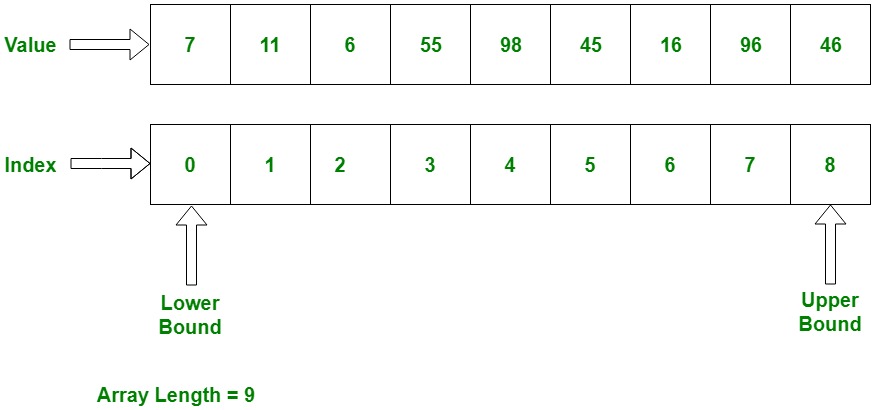
Array
-
add?
-
remove?
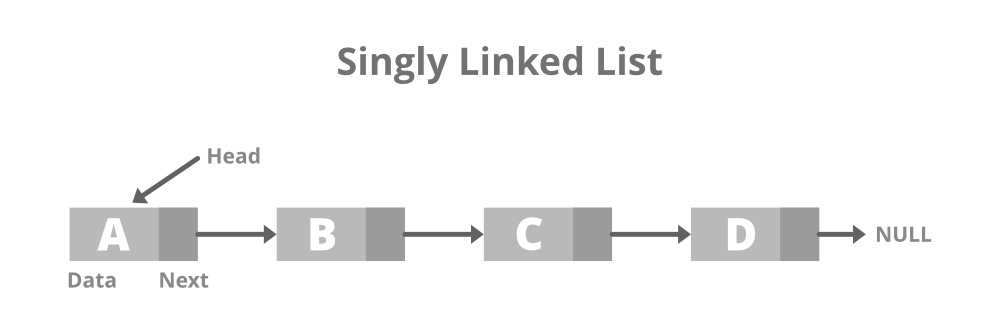
Linked List
- singly linked list
- circularly linked list
- doubly linked list
Stack
- python list
Queue
- queue
- circular queue
- doubly-ended queue (deque)
- priority queue
Heap
- parent 값보다 항상 큰 binary tree
- complete 하다 := 각 level 의 node 가 maximal
- insert : log n. 밑 바닥에 넣음
- delete : log n. 맨 위 값(min) 를 뺌.
- array 로 구현할 때
- 왼쪽 : $2f(p) + 1$
- 오른 쪽 : $2f(p) + 2$
- heap 을 priority queue 만들 때 쓰면?
- 넣고 뺄 때 $O(log(n))$
- unsorted list / sorted list / heap 과 비교
- insert 자주 일어나면 unsorted list
- min 조회 자주 일어나면 heap or sorted list
- 둘 다 자주 적당히 일어나면 heap
- buttom up 방식으로 construction 하면 $O(n)$
- heap sort
- min 값 계속 빼면 sort 됨 ㅋ
- heap 만드는데 O(n) + 하나 빼는데 O(log n) * n 개
Hash table, Map, Skip List
Map : (key, value) 로 저장하는 형태
Hash map
hash function mod
- chain
- probe
- linear probe
- quadratic probe
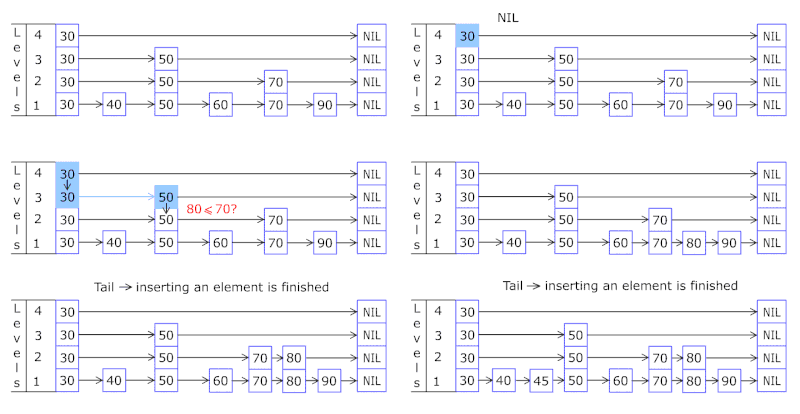
skip list
linked list 를 binary search
Tree
-
Tree
-
Binary Search Tree
-
Balanced Search Tree
- rotation
- single rotation
- double rotation (trinode restructuring)
- rotation
-
AVL Tree
- Height Balance Property : For every interval position p of T, the heights of the children of p differ by at most 1
- AVL tree := 위 조건을 만족하는 binary tree
- height 변화 감지하여 trinode restructuring
-
(2, 4) Tree
- multiway search tree 중에 depth 같고 children 최대 4명
- 넣다가 4명 넘으면 중간 값 하나 위로 올림 (split)
- 값이 비면 parent 에서 값 가저옴 (fusing)
-
AVL tree & 2,4 tree 는 balancing 에 많은 시간 쏟음
- O(1) 이긴 한데 여러번의 step 이 필요할 수도 있음
-
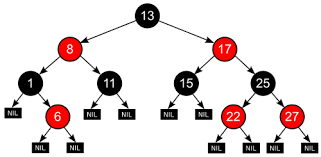
Red - Black Tree
- balance 에 O(1)
- rule
- root is black
- external node is black
- children of red is black
- every external node has same black depth
- insertion
- sibling 이 black -> trinode reconstruction
- sibling 이 red -> 검은색 한 단계 아래로 보냄
- deletion
- 없어지는게 흰색이면?
- child 중에 흰색인거 옮기거나
- 둘 다 검은색이면 검은색 중 하나 흰색으로 만들면 됨
- sibling 이 black & sibling 이 red child 가지고 있음 -> trinode reconstruction
- sibling 이 black & children 둘 다 black -> recoloring
- sibling 이 red -> single rotation & recoloring
- 없어지는게 흰색이면?
- https://www.cs.usfca.edu/~galles/visualization/RedBlack.html 이 사이트에서 실험해보기!
Graph
-
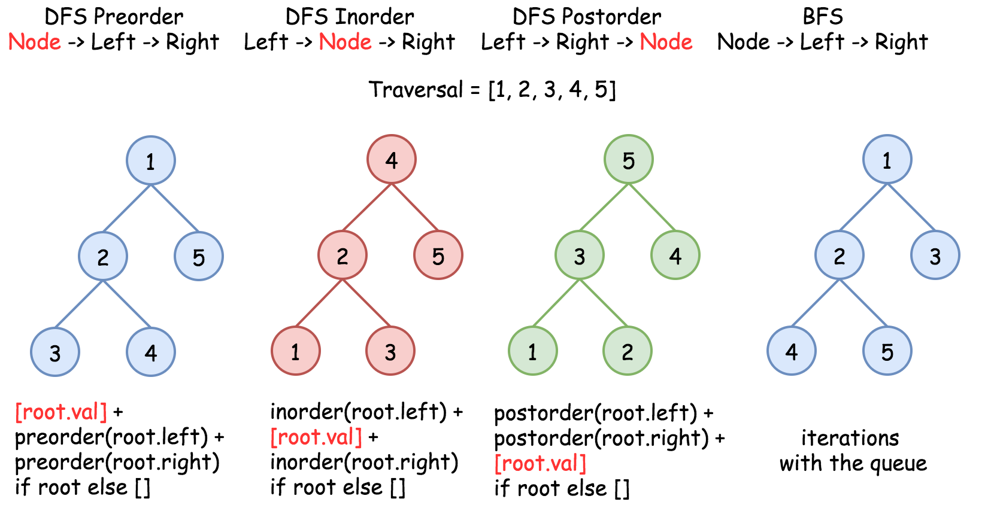
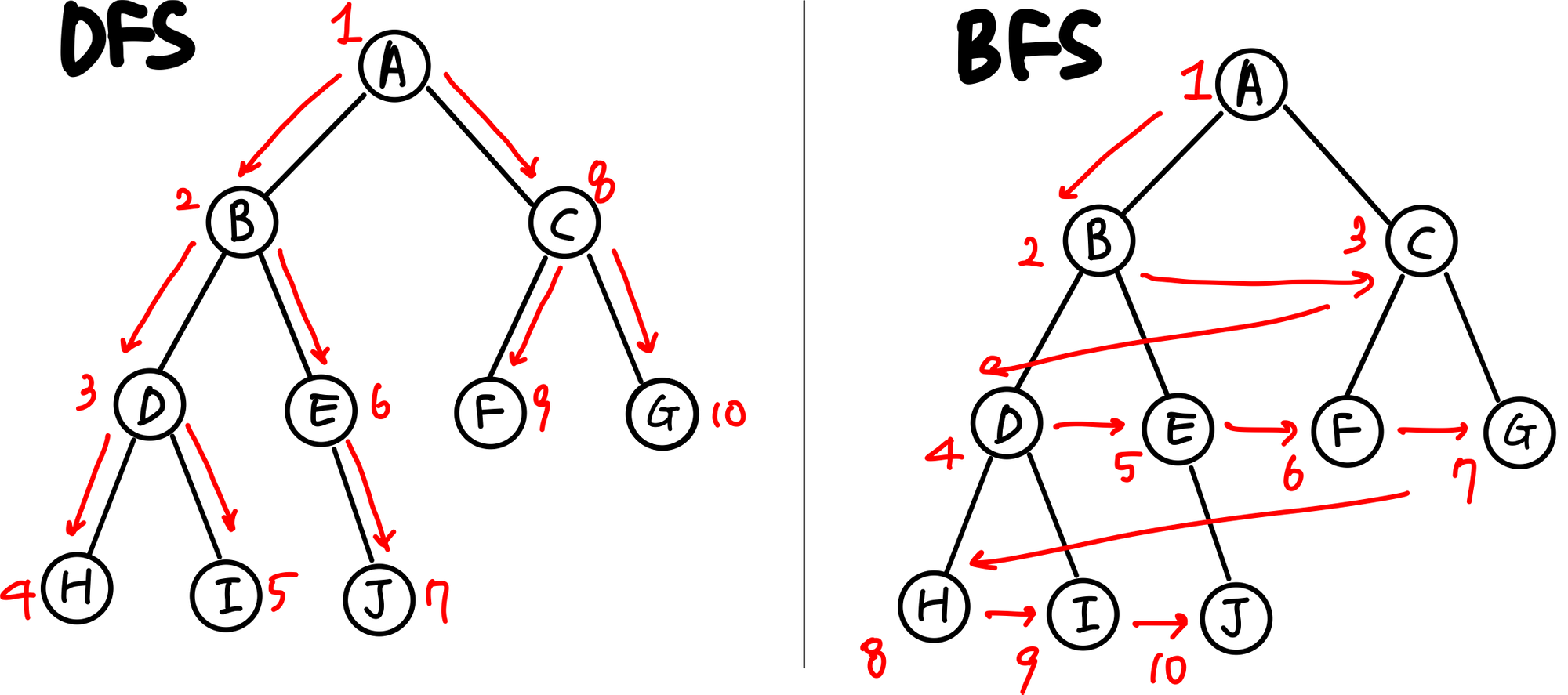
DFS & BFS
Shortest Path
- Dijkstra’s Algorithm
- Bellman fold Algorithm
Minimum Spanning Tree
-
Kruskal’s Algorithm
-
Prim - Jarnik Alrogithm